Table of Contents
- What Is a Recruitment Agency?
- How Do Recruitment Agencies Work?
- Why Recruitment Agencies Are Important in the UAE Job Market
- Types of Recruitment Agencies in the UAE
- How Recruitment Agencies Source for UAE Businesses
- Benefits of Using Recruitment Agencies for UAE Businesses
- Why Industry-Specific Recruitment Expertise Matters
- Conclusion
- FAQs
Overview:
- Recruiting agencies find, screen, and recommend potential candidates to organizations, helping human resource departments save time and effort.
- Legal Matters in the UAE: Handling complex local laws such as MOHRE law, WPS payroll, and processing of the visa.
- Operational Models: Permanent hiring, executive search, blue-collar labor recruitment, hiring on a contract basis, and employer of record.
- Business Benefits: Fast hiring, people already screened, reduced paperwork, and specialization in the industry.
Hiring the right talent in the UAE market takes time, operational space, and local compliance expertise. Many times, business owners and HR managers wonder how recruitment firms can help to simplify this challenging task. In-house recruitment can consume valuable time and resources away from the business and contribute to potential delays in the business.
This guide illustrates how the workforce sourcing process functions, the value of staffing partners, and how traditional external models enhance operational effectiveness. You will understand how agencies find their best resources, how to ensure compliance, and how they provide manpower. This is only possible by choosing a specialized recruitment partner, giving your organization a competitive edge that lasts for a long time.
What Is a Recruitment Agency?
A recruitment agency acts as a go-between for companies looking to hire talent and professionals seeking jobs. Companies pass the job posting and screening of applicants workload to specialists in staffing. Instead of handling the tedious part of job posting and screening candidates themselves, companies will delegate the workload to specialist staffing companies.
These agencies assess the availability of the target market, check the credentials, and provide a shortlist of highly qualified people. For businesses in the UAE, full-service agencies manage the entire process of workforce mobilisation, visa application, and long-term manpower management.
Organizations have decided to outsource the talent acquisition process to allow their internal teams to focus on strategic growth; in this way, they won’t have to deal with mundane matters.
How Do Recruitment Agencies Work?
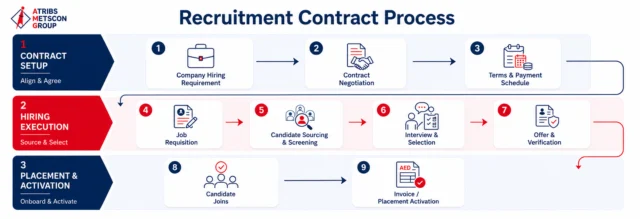
Recruitment agencies work via a method that enables the agency to match suitable competencies of a candidate to the requirements of a specific organization. This process starts with consultation with the client to identify the needs, requirements, project timeline, and technical requirements.
Then, the agency uses its vast database of talent to recruit the candidates. These are carefully screened by experienced recruiters, and their qualifications and fit with the organization’s culture are tested. After shortlisting the candidates, the agency ensures that they are interviewed in an organized manner.
Throughout the whole process, a good recruitment agency ensures strict compliance with the labor law in UAE. This eliminates any potential legal hazards faced by the hiring organization.

Outsource Your Recruitment and Hire Faster

Why Recruitment Agencies Are Important in the UAE Job Market
The rapid pace of change in the UAE requires businesses to ramp up their workforces quickly while adhering to strict laws and regulations. The ups and downs of the labor market may prove a challenge for your human resources department and delay project delivery.
In such a situation, recruitment firms come into play since they can give companies instant access to suitable candidates. They know compliance requirements from MOHRE, WPS regulations for payroll, and visa-related processes. This local knowledge helps to avoid expensive administrative mistakes and keeps companies on the right side of the law.
Specialized staffing providers understand the specific nuances of project-based hiring and temporary manpower scaling. This means that companies in sectors such as construction and engineering can stay agile and mobilize resources fast in a rapidly changing market.
Types of Recruitment Agencies in the UAE
Different industries require different workforces, which leads to different agency models. These categories allow companies to choose the right operational partner.
- Traditional Recruitment Agencies: They mainly focus on Permanent placements for mid- to senior-level positions in corporate sectors.
- Executive Search Firms: Access C-suite and niche leadership profiles through industry networks.
- Temporary and Contract Staffing: We provide temporary manpower for short-term projects. We deal with payroll, benefits, and visas directly to help you reduce your liabilities as an employer.
- Blue-Collar and Manpower Suppliers: Offer bulk workforce solutions for industrial and construction sectors, including mass mobilization and accommodation logistics.
- Employer of Record (EOR): Place global talent and assume full legal responsibility for employment compliance on behalf of the client.
How Recruitment Agencies Source for UAE Businesses
Effective candidate sourcing requires much more effort than just posting advertisements on standard job boards. The best staffing partners employ multi-tiered approaches to find active job seekers and passive industry professionals.
They have pre-vetted candidates in extensive internal databases for immediate deployment. Agencies also turn to industry-specific networking, professional digital platforms, and strategic headhunting to find the best talent.
Proactive recruiters plan for large-scale industrial requirements through overseas recruitment drives. These trips allow them to witness the technical skills in action, conduct medical clearances, and coordinate the international mobilization logistics. This multi-channel strategy guarantees that companies are always presented with candidates that match their operational needs, technical requirements, and aggressive project timelines.
Benefits of Using Recruitment Agencies for UAE Businesses
Working with a specialized staffing provider provides very real operational and financial advantages.
- Faster Time-to-Hire: The ability to instantly tap into databases of pre-screened candidates dramatically shortens the time-to-hire and resulting costly productivity losses.
- Less Paperwork – Agencies do all the candidate screening, interview scheduling, and background checks.
- Compliance with regulations: Employment agencies make sure that all employment processes are compliant with the local employment laws, protecting companies from legal ramifications.
- Actionable Market Intelligence: Recruiters can provide useful insight into competitive compensation packages, talent availability, and emerging industry patterns.
- Clear Service Agreements: The contract between the recruitment agency and the company establishes transparent deliverables, specific cost structures, and clear placement guarantees, ensuring mutual accountability.
How to Choose the Right Recruitment Agency in the UAE
The right staffing partner can make a difference in the quality of your overall workforce and long-term project success. Look for the agency’s industry experience and a successful track record of placements to begin with this process.
Request case studies demonstrating successful scaling to similar operations. Evaluate their internal compliance systems, especially their expertise in MOHRE regulations, WPS system management, and bulk visa processing.
A reliable workforce solutions provider should consistently offer transparent communication, detailed service level agreements, and a highly consultative approach. Prioritize agencies that demonstrate a commitment to long-term operational partnerships rather than focusing solely on transactional candidate placements.
Outsource Your Recruitment and Hire Faster
Why Industry-Specific Recruitment Expertise Matters
Generic recruitment approaches often fail when used in specialised sectors. Specialist recruiters have a level of technical knowledge that generalist agencies can’t match.
They know exactly what certifications are required for tough engineering jobs, what compliance requirements are expected for healthcare workers, and what safety procedures are necessary for workers in construction. Such specific knowledge allows them to assess the candidates correctly, not only to screen resumes but to judge the practical competencies.
A sector-specific partner ensures that the candidates presented possess the practical skills to hit the ground running. This targeted accuracy reduces internal onboarding time and operational friction.
Conclusion
As businesses understand how workforce sourcing functions, they can start to modify their processes for acquiring talent and meeting their staffing needs. The main support is provided by recruitment agencies that manage the recruitment process, fulfill legal conditions, and help meet deadlines for important projects.
Regardless of whether you need temporary assistance for finishing a challenging task or permanent recruitment help for growing the business, an adequate strategy can solve your problems and save some time.
FAQs
Do Employers Pay Recruitment Agencies?
Yes. Employers typically pay the agency a pre-agreed fee upon successful placement or based on a contract for ongoing staffing services. Candidates do not pay for recruitment services.
How Long Does Recruitment Take?
Timelines vary significantly based on role complexity and industry requirements. Standard corporate placements may take weeks, while mass mobilization for industrial projects can be expedited through existing databases.
Can Recruitment Agencies Help Construction Companies?
Yes. Specialized agencies supply robust blue-collar manpower, comprehensively managing bulk visa processing, strict WPS compliance, and large-scale workforce mobilization tailored explicitly for demanding construction projects.
Are Recruitment Agencies Worth It for SMEs?
Yes. SMEs benefit greatly by outsourcing complex hiring tasks, allowing lean internal teams to focus heavily on core operations while simultaneously ensuring local compliance and accessing higher-quality talent.